

Termite inspections · Hattiesburg & the Pine Belt
A real inspection, not a walk around the yard.
Full-structure checks with straight findings and no obligation.
Where we look
Termites work where you don't.
Your inspector goes where termites actually are: foundation walls and slab edges, the crawl space, sills and joists, plumbing penetrations, attic framing, moisture-prone wood, and the earth-to-wood line outside where subterranean termites build their mud tubes.
What you get back is plain language — whether there's live activity or old damage, what the damage looks like, and the conditions inviting them back. If it needs treatment, you get a firm quote before any work begins. If it doesn't, you'll hear that too.
 Know the signs
 Know the signs
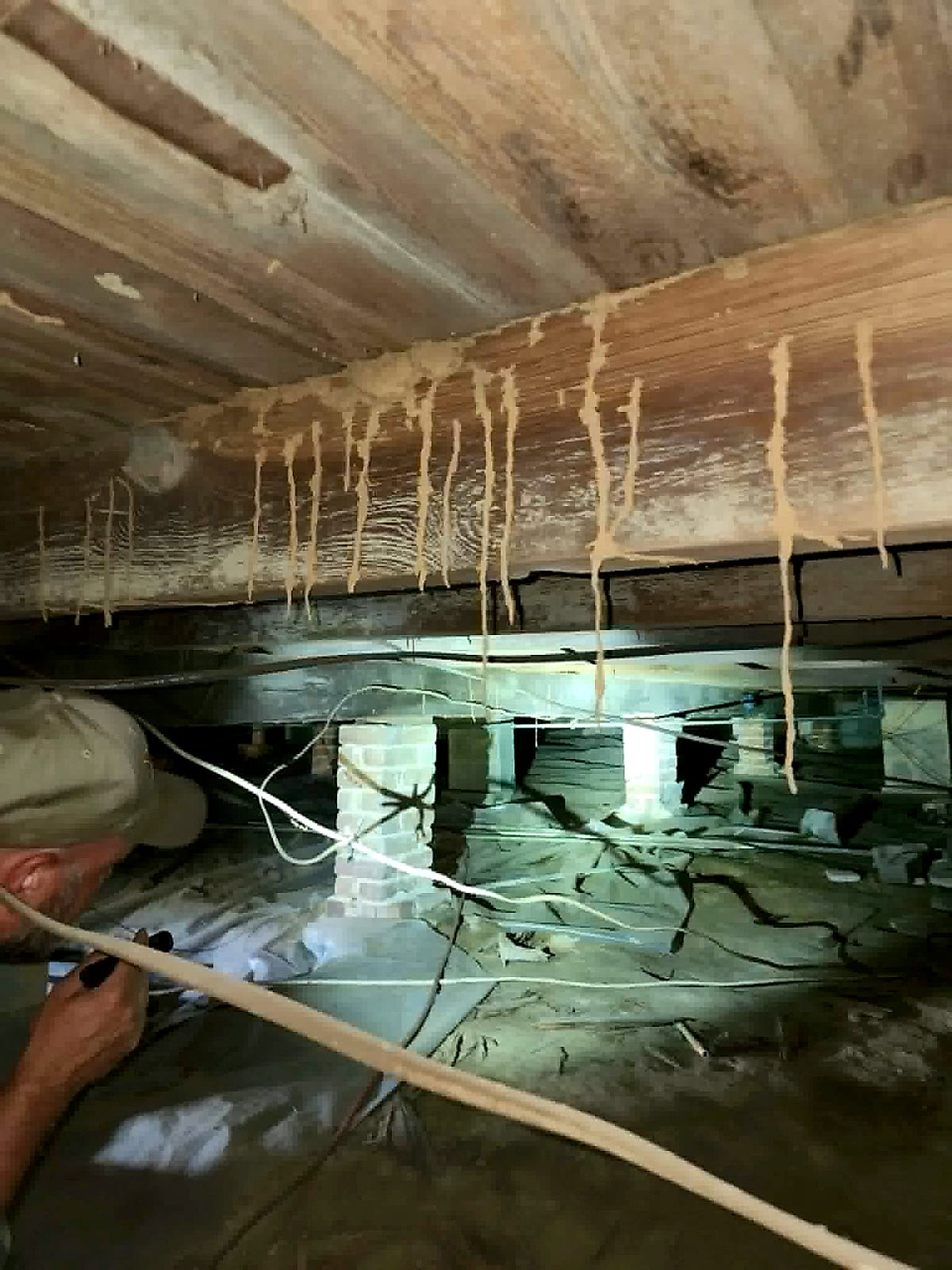
Mud tubes mean move fast.
Pencil-wide mud tunnels on a wall or foundation, discarded wings on a windowsill, wood that sounds hollow when you knock it, floors that feel soft, paint that bubbles or ripples.
Any one of those is worth a look. Termites never stop eating, and the sooner it's inspected, the smaller the repair.
 What we find
 What we find
This is what they leave behind.
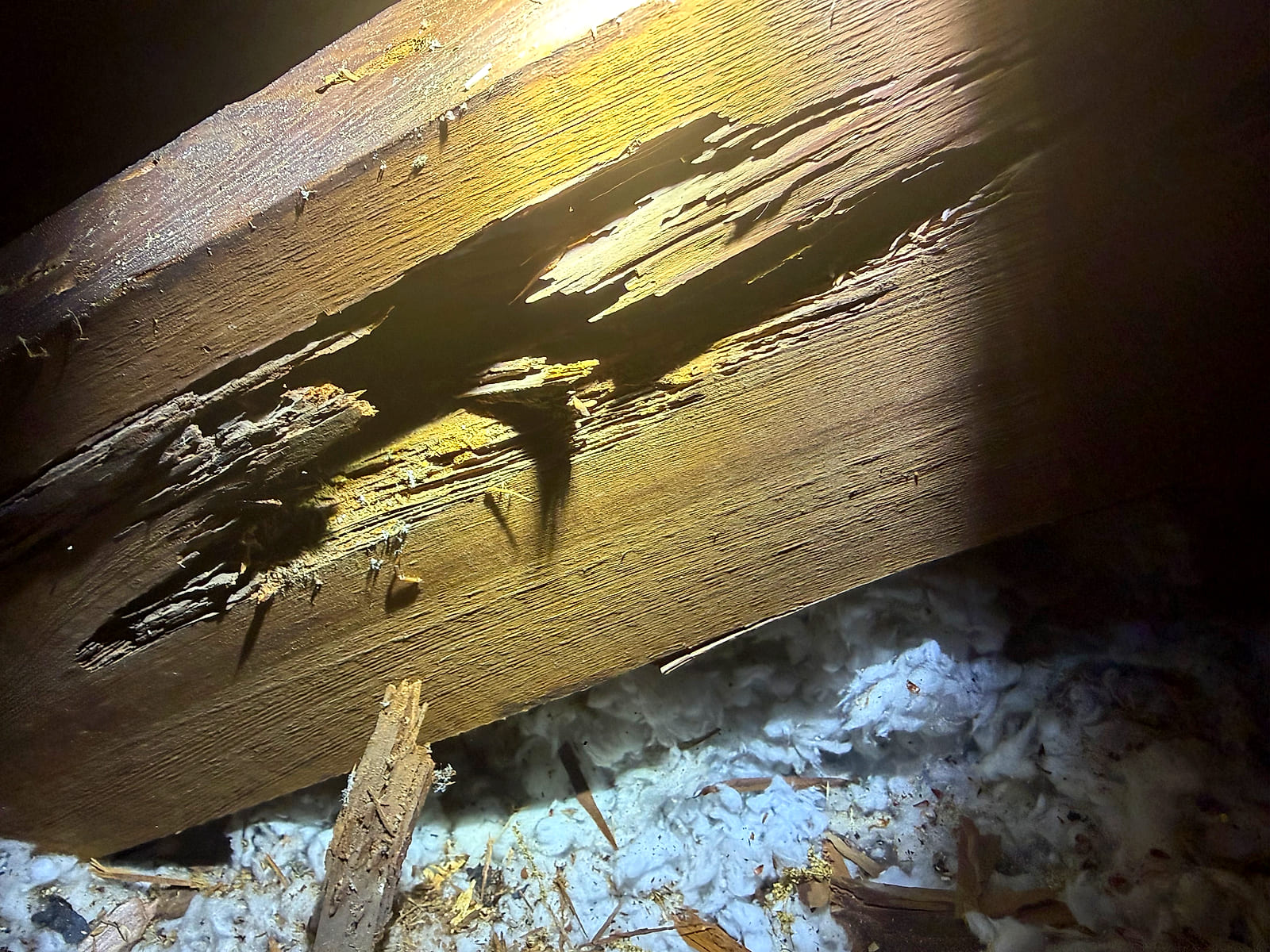
An attic beam in a Pine Belt house, eaten out along the grain. The wood is still standing, and from the rooms below nothing looks wrong at all.
That is why an inspection goes into the attic as well as under the house. Damage like this is found with a light and a probe, not from the yard.
 Termite carton & hidden damage
 Termite carton & hidden damage
Carton is a clue. An inspection establishes the next step.
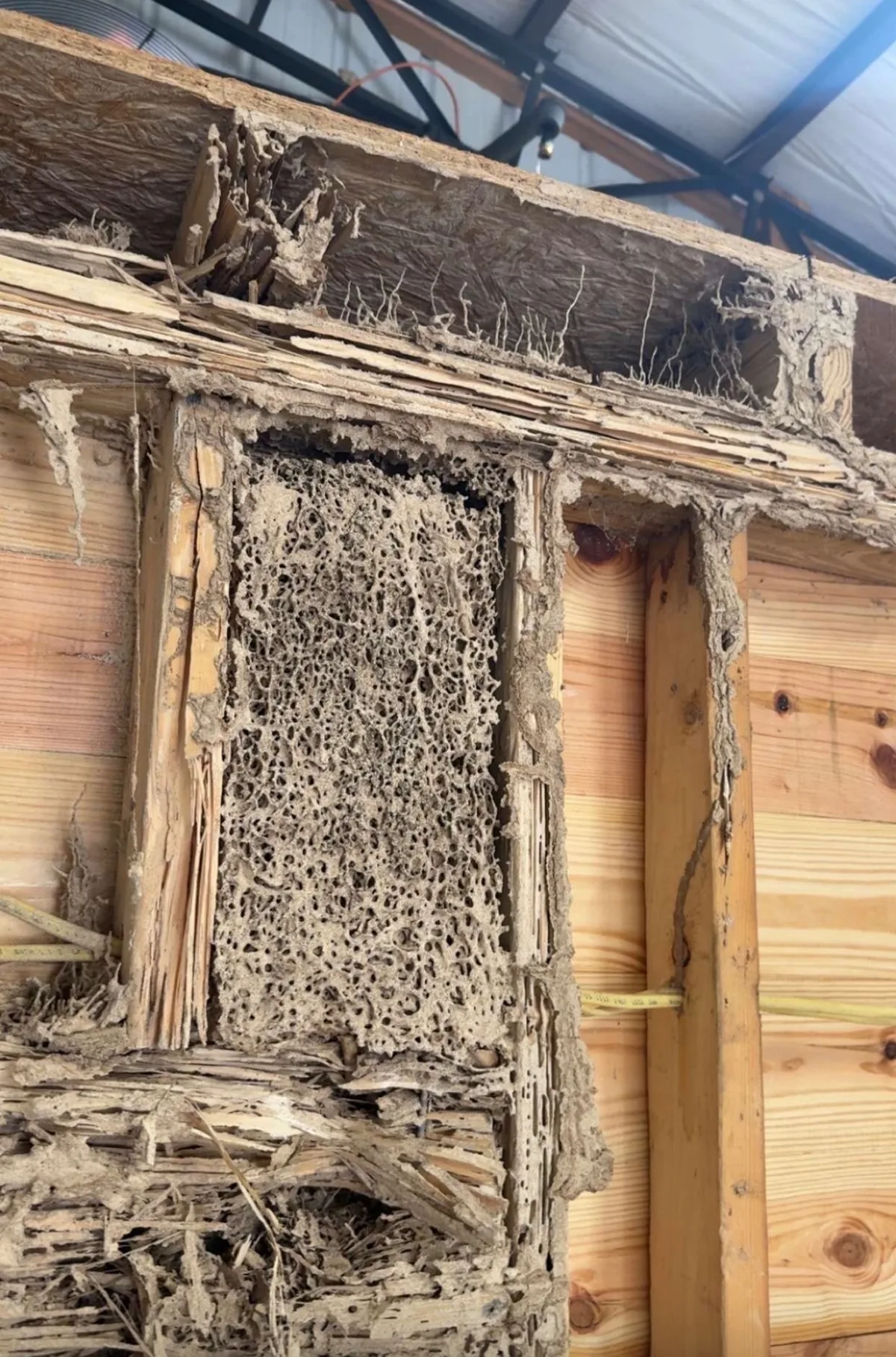
This exposed wall shows why a termite inspection considers more than surface marks. The carton nest sits between damaged framing members, in a space that wall coverings can hide. Carton and damaged wood are evidence to investigate; a photograph cannot tell you the full extent of damage or whether live termites remain.
An inspector checks accessible areas for activity, mud tubes, damaged wood and moisture conditions, then explains what was found and any areas that could not be inspected. If you uncover material like this during repairs, photograph it and contact Parker’s to discuss the termite findings and treatment options.
Frequently asked
Straight answers about inspections
What does a termite inspection cover?
The full structure: foundation and slab edges, crawl space, sills and joists, plumbing penetrations, attic framing, and the exterior soil line. Your inspector looks for live activity, mud tubes, damaged wood, evidence of past treatment, and the moisture and wood-contact conditions that invite termites.
How much does an inspection cost?
We quote it straight — call (601) 610-0601 and you'll know before we start. If treatment is needed, you get a firm number before any work begins. No pressure, no mystery fees.
How fast can you come out?
Call and ask — we get back to you within 24 hours, usually the same day. Termites don't wait, so neither should the inspection.
What if you find something?
You get the findings in plain language and a firm quote before any work begins. Deciding to treat is your call, not a foregone conclusion — and if it doesn't need treating, we'll say so.
Ask about our
Pest Free Guarantee
It's simple: if we treat your house and you still see bugs, we come back out and treat that area again — free. No argument, no second invoice. The guarantee comes with our monthly and every-other-month plans.
Call (601) 610-0601Termites don't take nights off